내용 | Content
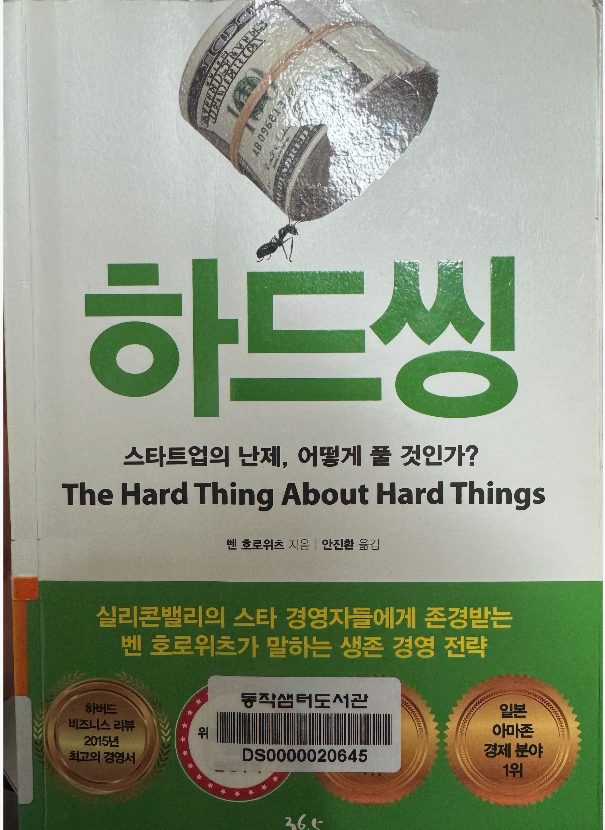
《하드씽》 전반부가 “회사를 어떻게 버틸 것인가”에 가깝다면, 후반부는 “회사를 어떻게 운영할 것인가”에 더 가깝다. 내가 읽으며 남은 핵심은 화려한 비전보다 조직, 피드백, 소통, 문화, CEO의 모드 전환이었다. 아래 5가지만 잡아도 이 책의 후반부는 거의 정리된다.
If the first half of The Hard Thing About Hard Things is about surviving, the second half is about operating. The real takeaway is not just ambition or grit, but organization, feedback, communication, culture, and the CEO’s ability to switch modes. These five points capture most of the second half.
1. 스타트업은 관성으로 굴러가지 않는다 | Startups Do Not Run on Inertia
- 신생기업은 저절로 돌아가지 않는다. 큰 회사처럼 이미 만들어진 구조가 없기 때문에, 초기 신생기업 임원은 단순 관리자가 아니라 직접 움직이고, 채용하고, 품질을 책임지고, 없는 프로세스를 만드는 사람이어야 한다. 스타트업에서 리더십은 직함이 아니라 회사를 앞으로 밀어붙이는 실행력이다.
- Early-stage startups do not move by themselves. There is no built-in system, no natural momentum, and no stable process. That is why early executives must be more than managers: they must hire, build, maintain quality, and create process from scratch. In startups, leadership means being the force that keeps the company moving.
2. 숫자는 중요하지만, 비전을 대신할 수는 없다 | Metrics Matter, but They Cannot Replace Vision
- 스타트업은 성장 수치에 과몰입하기 쉽다. 하지만 숫자만 좇으면 제품은 점점 나빠지고, 사용자 경험은 무너진다. KPI는 계기판이고, 비전은 방향이다. 둘 다 필요하지만, 비전 없는 숫자 경영은 결국 회사를 빈 껍데기로 만든다.
- Startups easily become obsessed with growth metrics. But when numbers become everything, product quality and user experience usually decline. KPIs are the dashboard, but vision is the direction. You need both, but metrics without vision eventually hollow out the company.
3. 피드백이 없으면 조직은 반드시 둔해진다 | Without Feedback, the Organization Becomes Blunt
- 방향만 던져주고 수정하지 않으면 사람들은 무엇을 잘못하고 있는지 알 수 없다. 그 대가는 결국 낮은 성과, 느린 개선, 반복되는 실수로 돌아온다. 좋은 조직은 좋은 사람만으로 만들어지지 않는다. 문제를 바로 말하게 하고, 바로 고치게 하는 피드백 구조가 있어야 한다.
- If leaders only set direction but never correct course, people cannot see what needs improvement. The cost shows up as weak performance, slow learning, and repeated mistakes. Great teams are not built only on talent. They depend on a feedback system that surfaces problems early and fixes them fast.
4. CEO의 핵심 업무는 ‘소통 구조 설계’다 | A CEO’s Core Job Is Designing Communication Flow
- 회의, 이메일, 사내 메신저, 보고 체계, 그리고 특히 1대 1 면담은 모두 소통 구조다. 중요한 건 관리자가 많이 말하는 것이 아니라, 현장의 문제와 아이디어가 위로 올라오게 만드는 것이다. 1대 1에서는 설명보다 질문이 중요하다.
- 우리가 더 나아지려면 무엇을 바꿔야 하나?
- 가장 큰 문제는 무엇인가?
- 우리가 놓친 가장 큰 기회는 무엇인가?
- Meetings, email, internal tools, reporting lines, and especially one-on-ones are all part of the company’s communication architecture. The goal is not for managers to talk more, but to ensure that real problems and useful ideas travel upward. In one-on-ones, questions matter more than speeches.
- What should we change to get better?
- What is our biggest problem?
- What is the biggest opportunity we are missing?
5. 좋은 CEO는 상황에 따라 모드를 바꾼다 | Great CEOs Switch Modes with the Situation
- 책에서 가장 강렬했던 부분은 평시 CEO와 전시 CEO의 구분이다. 평시에는 위임, 문화, 성장, 합의가 중요하지만, 전시에는 생존, 집중, 통제, 속도가 더 중요해진다. 핵심은 어느 쪽이 더 멋진가가 아니다. 지금 회사가 어떤 국면인지 정확히 읽고, 그에 맞는 운영 방식으로 전환할 수 있느냐가 중요하다.
- One of the most memorable ideas in the book is the difference between the peacetime CEO and the wartime CEO. In peacetime, delegation, culture, growth, and alignment matter. In wartime, survival, concentration, control, and speed matter more. The real question is not which style sounds better. It is whether the CEO can read the situation correctly and switch operating modes fast enough.
Conclusion | 결론
- 이 책 후반부를 한 문장으로 줄이면 이렇다. 회사를 만드는 능력과 회사를 운영하는 능력은 다르다. 창업자는 제품만 잘 알아서는 안 되고, 사람·조직·소통·결정 구조까지 배워야 한다. 결국 CEO의 일은 멋진 말을 하는 것이 아니라, 회사가 제대로 움직이게 만드는 것이다. 특히 인상적이었던 건, 문화조차도 선언문이 아니라 초기 리더의 반복 행동에서 생긴다는 점이다. 그래서 후반부는 추상적인 리더십론보다 훨씬 실용적이다. 스타트업을 키우는 사람이라면, 이 책은 동기부여용이 아니라 운영 매뉴얼로 읽는 편이 더 맞다.
- If I had to reduce the second half of the book to one sentence, it would be this: building a company and operating a company are different skills. Founders cannot stop at product insight. They must also learn people, structure, communication, and decision-making. In the end, the CEO’s real job is not to sound impressive, but to make the company work. What stood out most is that even culture is not built from slogans, but from the repeated behavior of early leaders. That is why the second half feels more practical than inspirational. For anyone building a startup, this book works better not as motivation, but as an operating manual.
Action Steps / Practical Tips
이번 주에 바로 해볼 일은 3가지다.
1) 핵심 팀원 3명과 1대1을 잡고, 질문 3개만 준비한다.
2) KPI 대시보드 옆에 “우리 제품이 왜 존재하는가”를 한 문장으로 적는다.
3) 리더 본인이 반복해서 보여줄 행동 기준 2개를 정한다. 예: “문제는 숨기지 않는다”, “피드백은 즉시 준다”.
Here are three actions you can take this week.
1) Schedule one-on-ones with three key team members and prepare just three questions.
2) Write one sentence next to your KPI dashboard explaining why your product exists.
3) Define two visible leadership rules you will model repeatedly, such as “we do not hide problems” and “we give feedback quickly.”
'Book Review' 카테고리의 다른 글
| 재미가 습관이 되는 법 | The Fun Habit (0) | 2025.12.14 |
|---|---|
| 불변의 법칙: 절대 변하지 않는 것들에 대한 23가지 이야기 | Same as Ever : A Guide to What Never Changes (0) | 2025.11.30 |
| 인피니트 게임: 무한게임 사고방식이 조직과 리더십을 바꾸는 5가지 법칙 | The Infinite Game: 5 Essential Principles of Infinite Mindset for Transformational Leadership (0) | 2025.10.12 |
| 타이탄의 도구들 | Tools of Titans (0) | 2025.08.31 |
| 인생을 바꾸는 작은 습관들 | The Choice Point (4) | 2025.07.30 |


